Cartoon: New Kind of Game
By Anthony | October 16th, 2006 | 12:15 am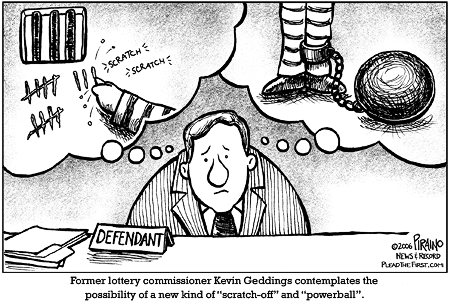
Former NC Lottery Commissioner Kevin Geddings is facing some serious jail time after being found guilty of several counts of fraud.
Former NC Lottery Commissioner Kevin Geddings is facing some serious jail time after being found guilty of several counts of fraud.
This year’s ConvergeSouth wrapped up yesterday. It was a great conference once again. The barbecue Friday night at David Hoggard’s was delicious.
On Saturday, the conference itself started off with Elizabeth Edwards, who laid to rest any fears that her talk would be politically partisan by barely mentioning anything even remotely partisan. She even shared the stage for part of the discussion with Mike Krempasky of RedState.com.
The next session I attended was led Robert Scoble and his wife Maryam. Their session was on “Ten ways to a killer blog”. They seemed very friendly and engaging. Here’s a photo of Sue Polinsky introducing them:

Between sessions I ate lunch with David Boyd, Fecund Stench and Gail Dunham.
After lunch, I attended Mr. Sun’s session entitled “The Big Bang”.
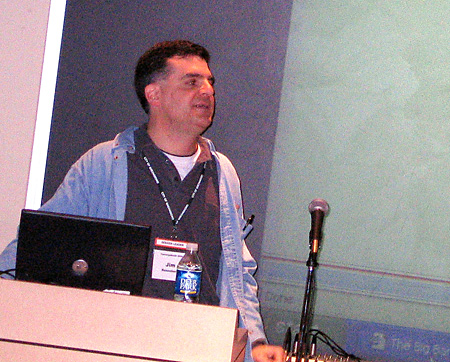
He outlined and explored options for dealing with online trollery and disruptive behavior. One point that came out of the discussion is that it doesn’t matter what your strategy is for dealing with disruptive behavior, the important thing is that you do come up with a strategy of some sort, make it known, and implement it. Strategies will differ between blogs depending on the disposition of the person running the blog, and the purpose of the blog, and that’s ok.
Finally, Ed Cone made some closing remarks, including mention of an impromptu after-conference talk about the “confidential” RMA report, which now seems to be on everyone’s fall reading list.
That evening I attended one of the dinners at Ganache. After we finally figured out how to arrange the tables so we could fit everyone in, I was pleased to be able to talk with some folks from Philly – Wendy Warren of The Philadelphia Daily News, and Dan Rubin, who writes the blog blinq for The Philadelphia Inquirer. I also got to meet and speak with Jim Buie, WillR, Bora Zivkovic, Zack and Elizabeth Exley, Austin Chandler, Kirk Ross, Cara Michele, and Ed Cone and his wife Lisa Scheer.
This was supposed to be the off-year – a smaller, more low-key version of the conference. Given that there were over 200 people attending, it’ll be interesting to see how large ConvergeSouth 2007 becomes.
Roch Smith Jr. recently attended a city press conference and tenaciously questioned Greensboro city manager Mitch Johnson on whether the city would eventually release the RMA report. The report was compiled last year by an independent consultant, and dealt with alleged corruption and misdeeds by former police chief David Wray and members of a covert unit under his command. Roch has posted the transcript of his questions and Johnson’s answers on Greensboro101.
The Lutheran has an interview with Judge John E. Jones, the federal judge who ruled on the Kitzmiller v. Dover Area School District Intelligent Design trial last year. Jones responds to some of the critics who disagreed with his ruling, touching on the role of the judiciary, our establishment clause, and his own faith.
Time recently published a letter from a Marine stationed in Iraq. It contains some great insight into the situation there, from someone who has to deal with it day in and day out. A few excerpts:
Worst City in al-Anbar Province — Ramadi, hands down. The provincial capital of 400,000 people. Lots and lots of insurgents killed in there since we arrived in February. Every day is a nasty gun battle. They blast us with giant bombs in the road, snipers, mortars and small arms. We blast them with tanks, attack helicopters, artillery, our snipers (much better than theirs), and every weapon that an infantryman can carry. Every day. Incredibly, I rarely see Ramadi in the news. We have as many attacks out here in the west as Baghdad. Yet, Baghdad has 7 million people, we have just 1.2 million. Per capita, al-Anbar province is the most violent place in Iraq by several orders of magnitude.
Biggest Surprise — Iraqi Police. All local guys. I never figured that we’d get a police force established in the cities in al-Anbar. I estimated that insurgents would kill the first few, scaring off the rest. Well, insurgents did kill the first few, but the cops kept on coming. The insurgents continue to target the police, killing them in their homes and on the streets, but the cops won’t give up. Absolutely incredible tenacity. The insurgents know that the police are far better at finding them than we are — and they are finding them. Now, if we could just get them out of the habit of beating prisoners to a pulp . . .
Biggest Outrage — Practically anything said by talking heads on TV about the war in Iraq, not that I get to watch much TV. Their thoughts are consistently both grossly simplistic and politically slanted. Biggest Offender: Bill O’Reilly.
Go read the whole thing. The bit about the “Best Chuck Norris Moment” is great, as is the remainder of the piece.
(Hat tip: Ed Brayton)
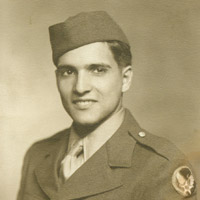
My Dad passed away last week. He was a World War II veteran, former president of the Delaware chapter of the Sons of Italy, and a retired Draftsman.
He came from a large family – nine brothers and sisters – and his parents were from Italy and Sicily. My Dad enjoyed being with family and loved holidays, especially Christmas. Dancing and card playing were two of his favorite activities – I seem to have picked up the card-playing gene, but not the dancing gene. He also loved home-improvement projects, and would never hesitate to build a desk, workbench, or knock down a few non-loadbearing walls around the house.
A friend pointed this out to me yesterday – apparently, Karl Rove has an October surprise up his sleeve for the elections this year:
In the past week, Karl Rove has been promising Republican insiders an “October surprise” to help win the November congressional elections … Rove is not saying what the October surprise will be … Rove said, “I’d rather let the balance [of plans for the elections] unroll on its own.”
My guesses as to what the surprise may be:
Any guesses, serious or unserious? Put them in the comments.
Key judgements from the “Trends in Global Terrorism” National Intelligence Estimate have been declassified and placed online. At least from this portion of it, the report sounds less damning than the original news articles suggested. Iraq is but one of several reasons listed for the spread of Islamic radicalism:
Four underlying factors are fueling the spread of the jihadist movement: (1) Entrenched grievances, such as corruption, injustice, and fear of Western domination, leading to anger, humiliation, and a sense of powerlessness; (2) the Iraq “jihad;” (3) the slow pace of real and sustained economic, social, and political reforms in many Muslim majority nations; and (4) pervasive anti-US sentiment among most Muslims – all of which jihadists exploit.
Of course it could be argued that our actions in Iraq are in part responsible for the fourth factor as well (anti-US sentiment among Muslims).
I’d certainly be interested in seeing the remainder of the report (or as much as possible) declassified, and some analysis of the contents. From this, it sounds like the war in Iraq is fueling the motivation and anger of radicals, but the war may not be as large a factor as the initial reports suggested – it’s difficult to tell from just this portion of it. However, I would maintain that this far into it, the fact that it’s even plausible that the Iraq war is setting us back in our war against Islamic terrorism doesn’t speak well for how the administration has handled things.
Robert Dreyfuss has an interesting take on the NIE in an article on TomPaine.com (written before the key judgements were declassified), suggesting that a Democratic embrace of the NIE’s reported conclusions could backfire:
In their eagerness to knock down Bush’s war in Iraq by using reports about the NIE, the Democrats risk giving another boost to the president in the “other� war, namely, the so-called war on terrorism. By embracing the NIE’s reported conclusion that the war in Iraq has made the threat of terrorism worse, the Democrats play into Bush’s strong suit. While most Americans think that the war in Iraq is wrong and not worth fighting, polls continue to show that support for President Bush as the commander in chief of the Global War on Terror. Ironically, by endorsing the idea that radical Islamist terrorism is a major threat to the United States, the Democrats could end up driving U.S. voters into the arms of the president once again.
Since August, the president and his political team have been trying to “change the subject� from Iraq, where they are weak, to terrorism, where they believe that they are strong. By provoking sharp controversies over issues such as electronic surveillance by the National Security Agency and by aggressively asserting the need to torture terrorist detainees, the White House has sought to put Democrats on the defensive, portraying them as lily-livered vacillators unwilling to take ugly but necessary steps against the terrorist enemy. So far, whether this cynical (and un-American) strategy is working isn’t clear. But the image of the president as terrorist-fighter is a powerful one, still.
I’m not sure I totally agree with this conclusion. The extent of any possible “backfire” would depend on whether people stop at the thought, “Terrorists are a grave threat” or continue on to the conclusion, “and Republicans have increased that threat by mismanaging the war in Iraq.” The whole point of any Democratic emphasis on the NIE would presumably be to point out that conclusion, but I guess voters don’t always see the finer details, and can be slow to change their perceptions, such as the view which regards Bush as a “terrorist-fighter”.
Regarding the reported content of the NIE, Dreyfuss also emphasizes the distinction between “anti-Americanism” and actual “terrorism” and cautions against throwing the terrorism label on anyone and everyone:
My own discussions with top, former U.S. intelligence and counterterrorism officials do indeed reflect an understanding in the intelligence community that the war in Iraq has inflamed radicalism in the Muslim world. Indeed, that has been widely understood for more than three years, and many of these same officials predicted exactly that before the war in Iraq, when they warned that the looming invasion would generate anti-American anger and bitterness.
But it is a long leap from anti-Americanism to terrorism. Arabs and Muslims seized with hatred or disdain from the United States have many options besides forming a terrorist cell. They can vote for Hamas, if they are in Palestine, and they’ve done that. They can vote for Hezbollah and join its militia, in Lebanon, and they’ve done that. They can join the anti-U.S. Sunni insurgency in Iraq, and they’ve done that. They can oppose moderate, pro-American regimes in Cairo, Amman, Riyadh, and Islamabad, and they’ve done that, too. And so on.
That being said, anti-Americanism certainly doesn’t help us any. Some may not care what others think of us, but our goals will be easier to accomplish if people want to work with us rather than against us.
A recent National Intelligence Estimate reportedly claims that the war in Iraq is actually increasing the risk posed to us by Islamic terrorism:
The classified National Intelligence Estimate attributes a more direct role to the Iraq war in fueling radicalism than that presented either in recent White House documents or in a report released Wednesday by the House Intelligence Committee, according to several officials in Washington involved in preparing the assessment or who have read the final document.
The intelligence estimate, completed in April, is the first formal appraisal of global terrorism by United States intelligence agencies since the Iraq war began, and represents a consensus view of the 16 disparate spy services inside government. Titled “Trends in Global Terrorism: Implications for the United States,’’ it asserts that Islamic radicalism, rather than being in retreat, has metastasized and spread across the globe.
On the one hand, as I wrote last year, many of those we are fighting against in Iraq seem to be Iraqis themselves, and they may not necessarily fit the usual definition of “terrorist”.
On the other hand, situations change, and this NIE may be looking at aspects other than simply who we are fighting in Iraq. There are also some more recent developments that suggest that terrorists may indeed have found a nice playground and training area in certain parts of Iraq, particularly in the lawless Anbar province (as reported in a recent Washington Post article):
The chief of intelligence for the Marine Corps in Iraq recently filed an unusual secret report concluding that the prospects for securing that country’s western Anbar province are dim and that there is almost nothing the U.S. military can do to improve the political and social situation there … [Col. Pete] Devlin reports that there are no functioning Iraqi government institutions in Anbar, leaving a vacuum that has been filled by the insurgent group al-Qaeda in Iraq, which has become the province’s most significant political force …
So is the NIE correct? Do we need to change course? The authors of Counterterrorism Blog make a good suggestion:
The American people deserve to know, to the maximum extent possible, the actual findings and conclusions in this NIE and not depend on partial reports and leaks, which could be driven by all sorts of hidden agendas. The White House and DNI Negroponte should ask the members of the 9/11 Commission to independently review the NIE and release an unclassified version or summary of the report as soon as possible.
I’m not sure I understand why it should be the 9/11 Commission to do it (anyone?), but I do agree that some sort of independent review should be made, and an accurate summary should be made available. It’s in our best interest to know if our strategies are really doing what they are supposed to be doing – reducing the threat of terrorism – or if they are actually making the problem worse.

Between the impending air traffic from the new Fed Ex hub, and the plans for a new juvenile detention center, North High Point seems to be shaping up to be one of Guilford’s premier locations for Things You Don’t Want in Your Backyard (or flying over your house).
